Select a province & language
Entrance to this website assumes you have read and agree to these Legal Terms and Conditions and the Privacy Policy.
Switching to a battery electric vehicle (BEV) for the first time is exciting, but it also comes with new things to learn. From charging habits to maximizing range, Toyota will help you understand the basics so you can enjoy a smooth transition and electrify your drive.
Additionally, to learn more about EV Technology, visit How Electric Vehicles Work
EVs have several unique features that differentiate them from gas vehicles.
EVs now offer more range, but the distance you can drive every day depends on various factors such as battery size, driving speed and habits (heavy acceleration or high speed), weather, and vehicle weight (passengers, cargo and towing). However, there are several things you can do to maximize your range:
To learn more, check Understanding Battery Electric Vehicle range & EV efficiency video.
There are several things you can do to keep your EV battery in optimal condition.
Additionally, Toyota’s EVs are backed up with an 8 year/160,000 km warranty giving you long-term peace of mind.
Did you know more than 80% of Canadians charge their BEV at home?[2]
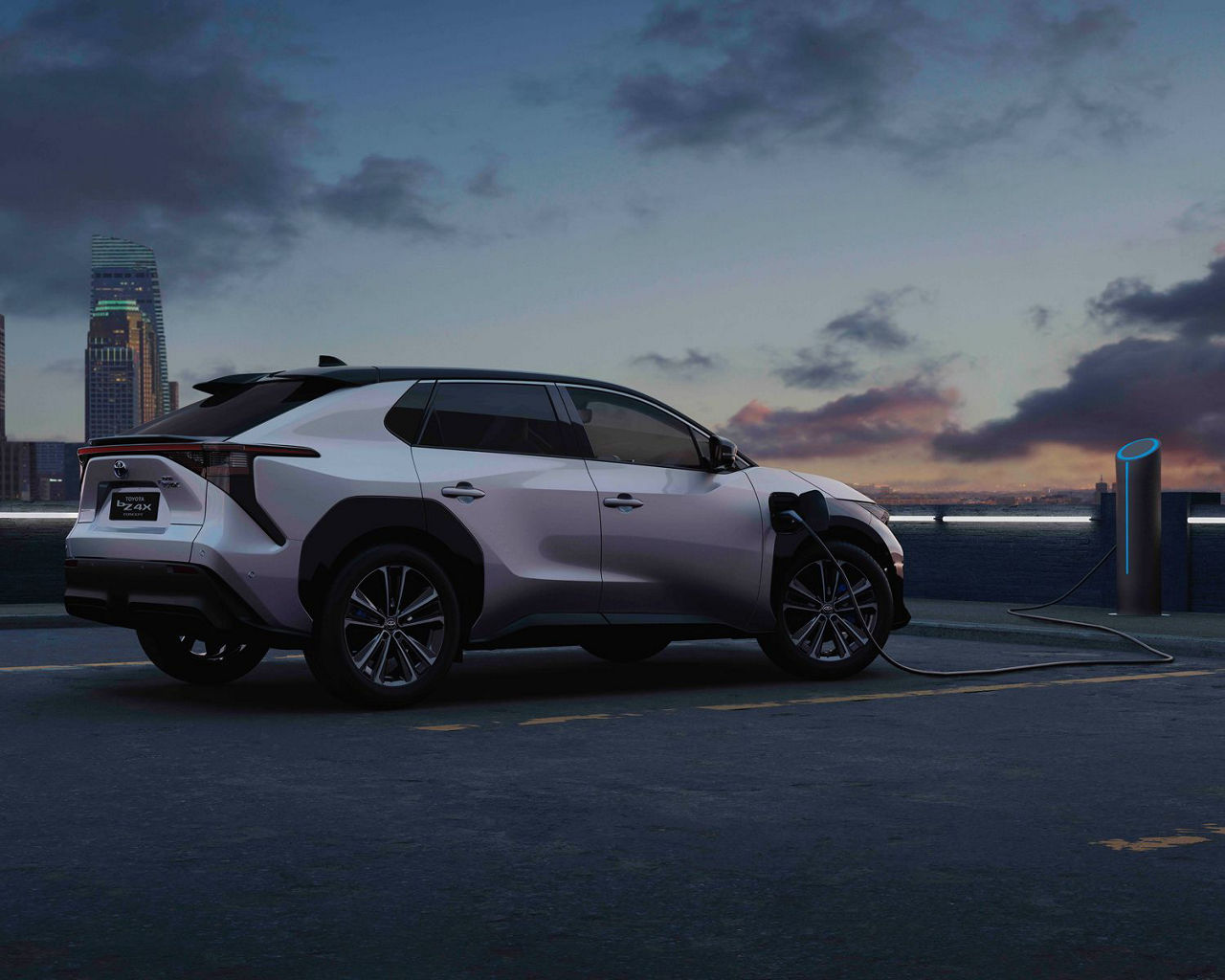
Based on your driving habits and vehicle needs, installing a dedicated Level 2 charger at your residence can offer faster charging speeds (vs. Level 1) and provide you with sufficient charge for your next drive. Level 2 EV chargers require a 240-volt outlet[3], the same type of outlet used by home appliances like a stove, or HVAC equipment. We recommend speaking to a certified installer to help you assess electrical capacity and requirements including the right plug head, installation location, equipment and costs. All 2026 Toyota BEVs will now come standard with a portable dual-voltage EV charging cable – that can offer Level 1 on a 120-volt outlet and Level 2 charging speeds on a 240-volt outlet.
Learn more at EV Charging at Home
While Canadian public charging infrastructure continues to grow, Toyota BEV owners can access public EV chargers across the country. Here are a few things to keep in mind.
A little planning goes a long way in helping you drive your EV with confidence. The average Toyota EV provides 350-450km of driving per charge, which is plenty considering the average Canadian drives just 50 km per day.
There are also things you can do to plan ahead and stay prepared.
Getting the most out of your BEV isn’t hard. In fact, in many ways BEVs require less maintenance than gas-powered vehicles.
|
|
|
Maintenance and Service |
Fewer moving parts than gas engines. |
Gas engines have more moving parts that require replacement or maintenance. |
Battery |
BEVs have 2 batteries, an EV battery to power the vehicle and a 12V battery. The EV Battery, like all Lithium-Ion batteries, will have some reduction in capacity over time. For peace of mind, Toyota EVs have an EV Battery Warranty of 8 years or 160,000 kms, whichever comes first.
|
Gas vehicles use a 12V battery to start the engine, while these are less expensive, they require more frequent checks and replacement.
|
Fluids / Oil |
As part of the regular EV maintenance schedule (every 6 months/ 8,000 km), EV’s do not require oil and filter changes. |
Gas vehicles require regular oil and filter changes as per the maintenance schedule.
|
Brakes |
EV vehicles use regenerative braking to slow the vehicle with the electric motor, reducing brake wear. |
Regular wear and replacement. |
There are excellent resources for EV drivers to get the most out of their vehicles. Apps like Zap‑Map and Plugshare offer reviews, reports and charger status. Vehicle-specific apps like the Toyota App offer a host of valuable features such as battery range, charging status, locating chargers and paying for charging on select charger networks.
Toyota has an Electrified vehicle for every lifestyle, but if you’re thinking about making the switch to a BEV, we encourage you to learn more about Toyota’s BEV lineup, including the 2026 bZ electric SUV, the 2026 bZ Woodland for outdoor enthusiasts, the new 2026 C-HR subcompact electric SUV and coming soon the family EV the new Toyota Highlander BEV.
Keep the battery in a moderate charge range (10%-80%) for optimal longevity.
Keep your charge between 10%–80%, which helps preserve battery health. Additionally, avoid charging to 100%, unless you need the range to make your trip.
Yes, you can charge your vehicle at home using either a Level 1 or Level 2 charger. Starting in 2026, Toyota BEVs will come equipped with a dual-voltage charging cable to facilitate charging.
Level 2 has twice the voltage and increased amperage than Level 1, meaning vehicles charge much faster. In public, Level 2 is widely available at public stations. Level 3 or DCFC (Direct Current Fast Charging) provides even higher voltage in the form of DC power and requires the use of specialized equipment, which is not available in residential homes.
With over 5000 public charging stations across Canada, getting a charge on the go should be no problem. Simply use the Toyota App plus your vehicle’s navigation system[5] to find the closest charger.
Yes, you can absolutely take an electric vehicle on a road trip, here are some tips to keep in mind:
DISCLAIMERS:
[1] Available on select Toyota BEV models only. May be activated manually or through the Toyota App by selecting a DC charging station destination in the vehicle’s navigation system. Toyota App requires an active DCM with paid or trial Connected Services subscription. Services are dependent upon connection to a compatible 4G wireless network provided by a third-party wireless service provider. Toyota is not responsible for cellular network discontinuance and will not provide compensation for reduced service availability. Toyota Connected Services requires account registration through Toyota App and acceptance of Connected Services Terms of Use at https://www.toyota.ca/connectedservices-termsofuse and Master Data Consent. Data charges may apply. For full details, please see the Owner’s Manual.
[2] https://natural-resources.canada.ca/energy-efficiency/transportation-energy-efficiency/zero-emission-vehicles/electric-vehicle-charging-charger-installation
[3] To reduce risk of fire, injury, or property damage, only (i) purchase/install a safety certified EV charger with voltage/current that is vehicle compatible (ii) use a licensed insured electrical professional to install charger (iii) install and operate in accordance with charger manufacturer’s instructions/warnings and applicable laws.
[4] Registration and app download are required. App and services subject to change at any time without notice. See usage precautions and service limitations in Owner's Manual. To learn about Connected Services by Toyota data collection, use, sharing and retention, please visit www.toyota.ca/connectedservices-privacy. Services are dependent upon connection to a compatible wireless network provided by a third-party wireless service provider. Toyota is not responsible for cellular network discontinuance and will not provide compensation for reduced service availability.
[5] Requires a Drive Connect trial or paid subscription (4G Network Dependent)
[6] Apple Maps EV Route planning requires an active connected services subscription.